The natural world often connects seemingly unrelated subjects in fascinating ways. Minerals and crystals belong to the scientific realm of geology, while historical figures and ancient texts belong to the domains of medicine, archaeology, and history. Yet, when we look more closely, intriguing links begin to appear. The scientific curiosity of individuals like John Hunter, the mineral wealth preserved in ancient tombs such as that of Tutankhamun, and the cultural symbolism found in funerary texts like the Book of the Dead together reveal how natural materials, scientific exploration, and historical knowledge intertwine. Understanding this relationship requires examining how minerals and crystals shape both scientific discovery and cultural heritage.
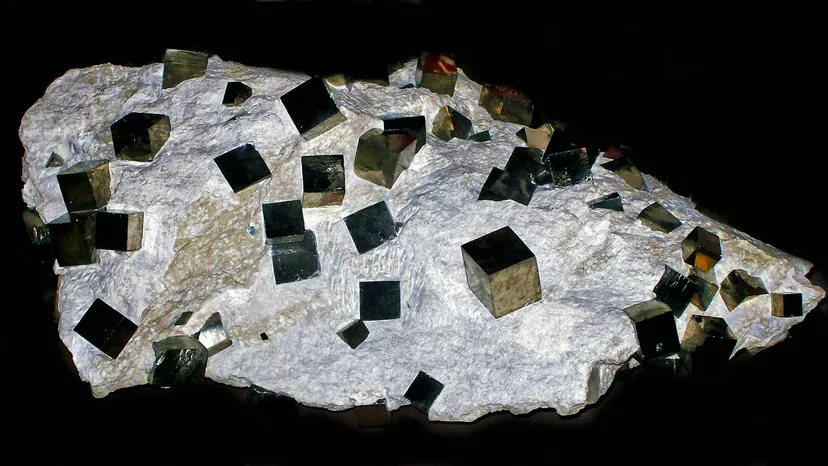
Minerals and crystals are the fundamental building blocks of the Earth. Minerals are naturally occurring inorganic substances with specific chemical compositions and structures. Crystals form when minerals solidify in repeating patterns, producing the geometric shapes admired in gemstones and rock formations. These John Hunter and the Book of Tut structures develop over long periods under precise conditions of heat, pressure, and chemical balance. Because of their durability and beauty, minerals and crystals have fascinated humans for thousands of years. They have been used in tools, medicine, art, architecture, and spiritual practices across civilizations.
Ancient cultures placed immense value on crystals and gemstones not only for decoration but also for symbolic and religious purposes. In ancient Egypt, for example, stones such as lapis lazuli, turquoise, quartz, and carnelian were frequently used in jewelry, burial masks, and ceremonial objects. These minerals were believed to possess protective and spiritual properties. Their colors carried meaning: blue stones symbolized the heavens and rebirth, green represented fertility and regeneration, and red signified power and vitality. The preservation of these minerals in tombs provides modern researchers with clues about ancient beliefs, trade networks, and technological skill.
This is where the historical significance of Tutankhamun becomes important. The tomb of Tutankhamun, discovered in 1922, contained a vast collection of mineral-based treasures, including gold ornaments, gemstone inlays, and carved crystal objects. Gold itself is a mineral highly valued for its rarity, resistance to corrosion, and brilliant appearance. The stunning burial mask of Tutankhamun features intricate mineral craftsmanship, combining gold with colored stones and glass to create an object of both artistic and spiritual importance. These materials survived for over three thousand years because minerals and crystals are remarkably stable over time. Their preservation allows historians and scientists to study ancient technologies and cultural expressions in extraordinary detail.
Funerary texts associated with Egyptian burials, commonly represented by the Book of the Dead, also connect symbolically with minerals and crystals. These texts guided the deceased through the afterlife and often referenced transformation, rebirth, and eternal existence—concepts mirrored in the enduring nature of crystalline materials. Crystals grow slowly and maintain their structure for millions of years, symbolizing permanence and order. Ancient artisans may not have understood crystallography scientifically, but they recognized the durability and beauty of these materials and associated them with immortality and divine power. Thus, the physical properties of minerals reinforced spiritual ideas expressed in funerary writings.
While ancient Egyptians used minerals artistically and symbolically, later scientists sought to understand them through systematic study. John Hunter, an influential 18th-century surgeon and scientist, represents the spirit of scientific curiosity that helped bridge natural observation and modern research. Although primarily known for advances in surgery and anatomy, Hunter was also deeply interested in collecting and studying natural specimens, including minerals and preserved biological materials. His collections demonstrated how careful observation of physical structures—whether bones, tissues, or crystalline formations—could reveal broader scientific principles.
Hunter’s approach reflected a shift from mystical interpretations of nature to empirical investigation. Just as mineralogists examine crystal shapes to understand chemical processes, Hunter examined anatomical structures to understand biological function. Both practices rely on close observation, classification, and comparison. Minerals and crystals became important scientific tools because their consistent geometric patterns helped researchers understand atomic structures and natural laws. Similarly, Hunter’s methods helped establish evidence-based medical science. The connection lies in the shared pursuit of understanding structure, formation, and function in the natural world.
Archaeology, geology, and medical science may seem like separate disciplines, but they often overlap through their reliance on material evidence. Minerals preserved in ancient artifacts provide data about historical trade routes and technological capabilities. Crystalline structures reveal environmental conditions present millions of years ago. Human remains studied by early scientists like Hunter offer insight into anatomy and disease. Each field depends on interpreting physical materials to reconstruct stories of the past. In this way, minerals serve as historical records just as much as written documents do.
Furthermore, modern technologies used to study ancient artifacts frequently rely on mineral science. Techniques such as X-ray imaging, chemical spectroscopy, and radiometric dating all depend on the predictable properties of crystalline structures. These methods allow researchers to analyze burial objects, manuscripts, and skeletal remains without damaging them. For example, the mineral composition of pigments can reveal how ancient texts were illustrated, while crystal analysis can determine the geographic origin of gemstones used in royal ornaments. Thus, minerals not only shaped ancient civilizations but also help modern scholars decode historical mysteries.
The relationship between minerals, crystals, historical figures, and ancient texts ultimately reflects humanity’s continuous quest for knowledge. Natural materials inspire spiritual beliefs, artistic expression, and scientific inquiry simultaneously. The treasures found in Tutankhamun’s tomb show how minerals symbolized divine power and eternal life. The scientific practices of John Hunter demonstrate how studying natural structures can revolutionize understanding in medicine and biology. Ancient funerary writings reveal how people sought meaning in the permanence and beauty of natural materials. Together, these elements illustrate how science, history, and culture are deeply interconnected.
In conclusion, minerals and crystals are far more than decorative natural objects. They serve as scientific evidence, cultural symbols, and historical records that link different eras of human understanding. From the gemstone treasures of Tutankhamun’s burial to the scientific curiosity of John Hunter and the symbolic themes found in ancient funerary texts, the study of natural materials bridges geology, archaeology, and medicine. These connections remind us that knowledge is rarely isolated; instead, it forms like a crystal itself—layer by layer, shaped by pressure, time, and the human desire to understand the world.
Leave a Reply