In error-proof assembly, torque is a frequent special characteristic because it is easy to specify and hard to verify consistently at production pace. A fastener can “feel” tight while being out of spec due to friction scatter, tool wear, joint relaxation, wrong screw length, cross-threading, or an incorrect run-down strategy. Consistent torque audits matter because they are one of the few practical ways to detect drift before it becomes a field issue.
Poor torque verification creates layered risk:
- Quality escapes: under-torque leading to loosening, leaks, noise, or electrical intermittency; over-torque leading to stripped threads, cracked housings, or gasket damage.
- False confidence: a tool that clicks or shuts off does not prove the joint met the specification.
- Traceability gaps: without recorded evidence, containment and root-cause become slower and more expensive.
- Unstable processes: torque scatter hides upstream variation (lubrication, surface finish, operator technique, joint stack-up).
Engineering and quality teams typically face three decisions: which tightening tool is appropriate (electric torque screwdriver vs. torque wrench), how to verify it (torque tester selection and audit method), and what data is required for compliance and internal control plans.
Fundamentals that affect error proofing
Torque control is not only a tool capability problem. It is a system problem tied to joint behavior and measurement method.
- Torque vs. clamp load: torque is an indirect proxy. Friction dominates, so identical torque does not guarantee identical clamp load.
- Static vs. dynamic measurement: a tester may capture peak torque during a dynamic rundown, or measure breakaway torque in a static test. These numbers can differ materially.
- Units and tolerances: a requirement like 6N⋅m±10% needs an audit method that matches the intent (production tightening vs. tool performance check).
For error proofing, the goal is repeatable tool output, controlled operator interaction, and documented verification that the process stayed within a defined window.
Electric torque screwdrivers in controlled fastening
Electric torque screwdrivers are commonly used in electronics, light industrial, and some automotive sub-assemblies where torque is low-to-medium and access/ergonomics matter. Their error-proofing strengths are tied to control and feedback.
Control and operator influence
Compared with manual tools, electric shutoff screwdrivers reduce variation introduced by:
- inconsistent speed and run-down angle
- premature release at “feel tight”
- different wrist posture and grip force
That said, operator influence is not eliminated. Push-to-start force, bit alignment, and how the tool is supported can affect cam-out and joint seating, especially on small fasteners and soft materials.
Data capture and traceability
Many electric tools support:
- torque and angle capture per fastening
- pass/fail logic with programmed limits
- cycle counting and error codes
- networked data logging to a controller or MES interface
This is where electric tools often outperform torque wrenches for regulated or audit-heavy environments: evidence can be automatically tied to a serial number, station, operator, and timestamp, reducing manual record error.
Limitations
Electric torque screwdrivers still require disciplined setup:
- incorrect transducer scaling or program selection can create systematic error
- bit wear and extension compliance can increase scatter
- torque control does not detect all errors (wrong part, missing washer, damaged thread) without additional poka-yoke inputs such as vision, presence sensors, or barcode validation
Torque wrenches in production and rework
Torque wrenches remain common in chassis, heavy industrial, maintenance, and rework because they are flexible, portable, and require minimal infrastructure.
Where torque wrenches fit
- low volume or mixed-model lines where programming overhead is high
- high torque joints where reaction management is critical
- service operations where data logging is not available
Click-type and cam-over tools can be consistent when used correctly, but they are more sensitive to technique: pull rate, handle position, and angle errors matter. Digital torque wrenches can provide better feedback and sometimes data output, but they still depend on correct operator execution.
Limitations
- No automatic error proofing: a click does not record who did what, when, or whether the wrench was applied correctly.
- Reaction and access issues: crowfoot adapters, extensions, and poor access can change effective torque or add variability unless corrected and validated.
- Audit burden: without direct data capture, compliance often depends on manual logs and periodic tool checks.
Torque testers and practical audit workflows
Torque testers are the bridge between “tool claims” and verified performance. In production, they are used in three common ways:
- Start-of-shift verification: confirm tool output on a tester before parts are built.
- Layered process audits: quality or manufacturing checks a sample of tools or stations at a defined frequency.
- After-event validation: investigate drift after defects, maintenance, or bit changes.
Selecting a tester method
- Static (breakaway) testing is common for click wrenches and dial tools. It is simple, but it may not represent dynamic rundown behavior.
- Dynamic testing better matches power tools and shutoff screwdrivers. It requires a tester designed for dynamic capture and appropriate joint simulators.
Match the tester range so normal readings fall in the middle of capacity, not near the bottom or top, to preserve resolution and reduce overload risk.
Audit documentation and traceability
A usable audit record typically includes:
- tool ID, serial number, and program number (for electric tools)
- tester ID and calibration status
- date/time, operator/auditor
- target torque and acceptance window
- sample count and results, including any adjustments and re-verification
If the plant requires traceability, prioritize testers and controllers that export results directly to the quality system, reducing transcription errors.
Calibration intervals and long-term reliability
Calibration frequency should be risk-based and informed by:
- fastening criticality and regulatory requirements
- tool duty cycle and environment (temperature, vibration, contamination)
- historical drift data and repair history
Also plan for consumables that affect torque outcomes: bits, sockets, and extensions. Treat them as process tooling with replacement criteria, not incidental items.
Why Choose Flexible Assembly Systems?
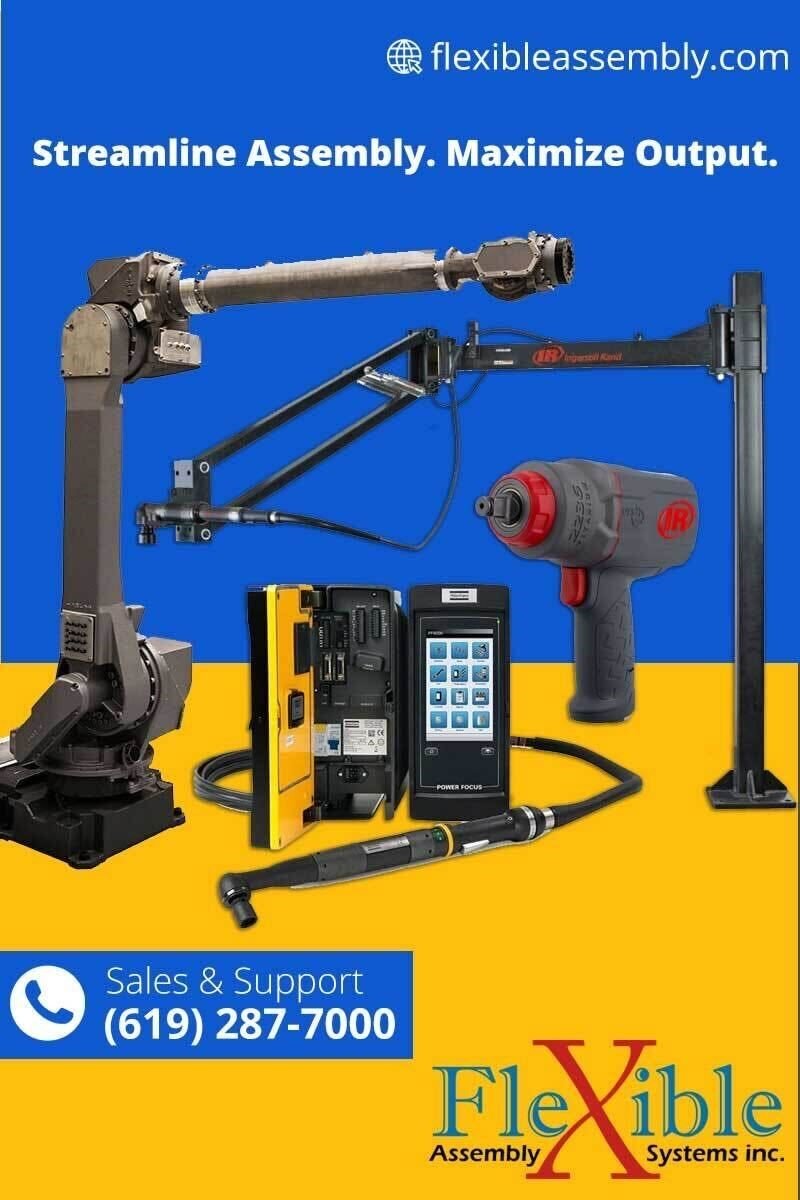
Flexible Assembly Systems supports torque-controlled assembly by aligning tool selection, verification method, and documentation needs with the actual joint and production constraints. Engineering support typically focuses on:
- application scoping: torque range, joint type, access, reaction management, and expected throughput
- tooling selection depth: electric torque screwdrivers, torque wrenches, controllers, and compatible torque testers for static and dynamic verification
- calibration knowledge: defining calibration and verification intervals, choosing suitable test methods, and maintaining traceable records
- regulated environment experience: supporting documentation practices used in automotive, aerospace, electronics, and industrial manufacturing where audit trails and change control are routine
The practical value is fewer mismatches between fastening tool behavior, tester method, and the evidence required by quality plans.
Conclusion
Electric torque screwdrivers and torque wrenches both have a place in error-proof assembly, but they control risk in different ways. Electric tools provide stronger control and easier traceability when properly programmed and verified. Torque wrenches offer flexibility and coverage for high torque, rework, and mixed operations, but they demand tighter control of operator technique and audit discipline. In both cases, torque testers, documented verification routines, and calibration practices are what convert “tightening” into a controlled, auditable process.